
How to Set Up Your Boot for Real Life (B and Q Runs, Garden Centres, and Weekend Jobs)
- By Hatchbag Team
- 23 Apr 2026
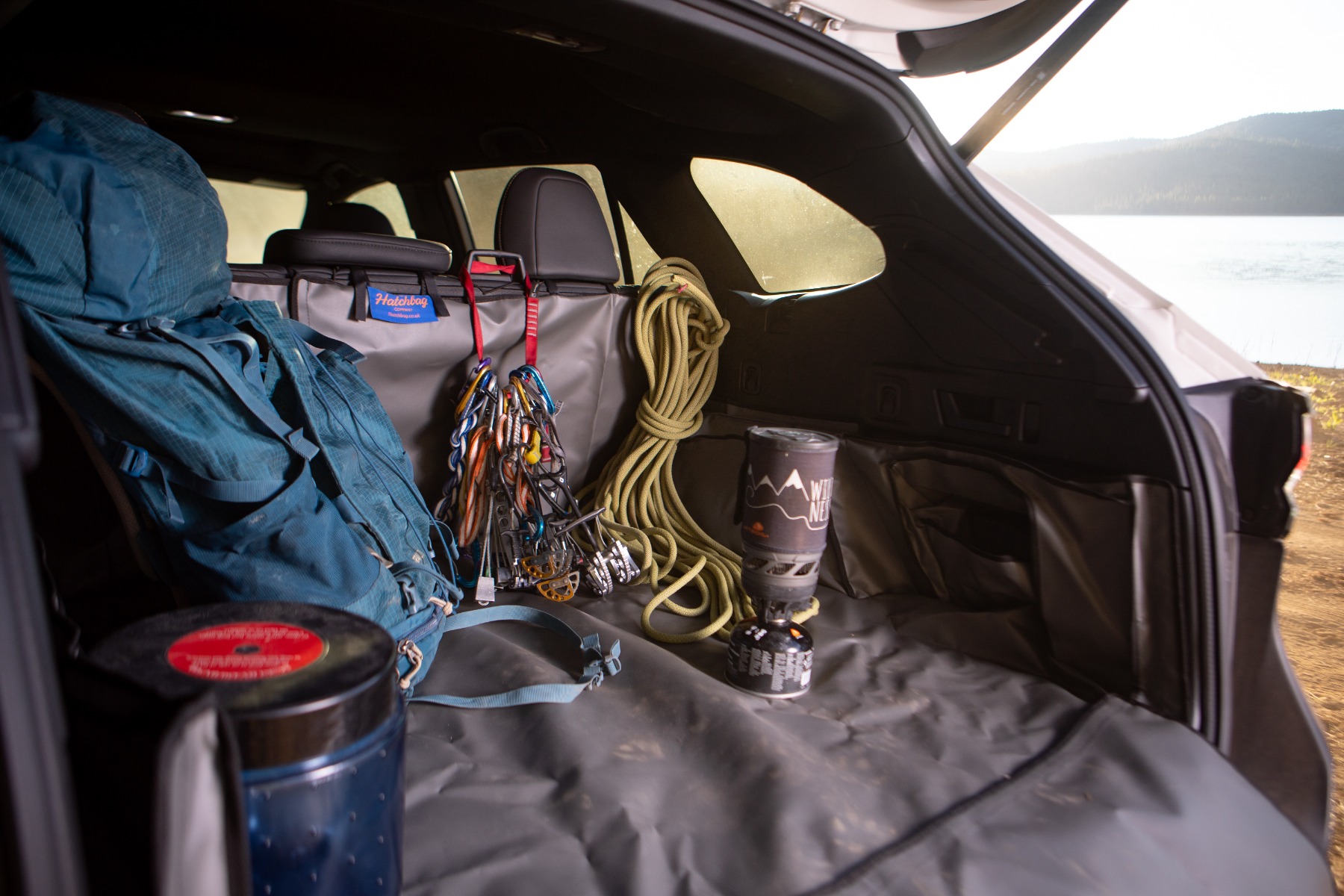
Set up your trunk for DIY runs and weekend projects with a clean, protected, and organised space.
See everything we offer
Set up your trunk for DIY runs and weekend projects with a clean, protected, and organised space.

Bank holidays in the UK follow a very predictable pattern. You wake up with good intentions, a list of jobs, and at least one trip to the tip or a garden centre already planned. By mid afternoon, your car boot looks like someone emptied an allotment into it. Soil on the carpet, a leaking bag of compost wedged against the spare wheel cover, muddy boots leaving prints across everything. If you want to keep boot clean DIY gardening weekends are honestly one of the biggest challenges you will face as a car owner.
It happens every time. And yet most people do not do anything about it until the damage is already done.
There is something about a long weekend that makes people ambitious. Suddenly you’re doing three garden runs, a trip to B and Q, and picking up a flat pack wardrobe, all in the same Saturday. Each job adds another layer of mess.
Garden waste is especially unforgiving. Compost bags split, soil spills from plants, and grass clippings get everywhere. Even if you’re careful loading things in, the drive home shakes everything loose. By the time you open the boot at the other end, the damage is already done.
Tools are another culprit. Spades, forks, and trowels covered in mud. Bags of gravel or sharp sand that leak through tiny holes you didn’t notice. Timber off-cuts that scratch the boot carpet on the way in and leave a trail of sawdust on the way out.
And then there are the boots themselves. Literally. Muddy wellies and gardening shoes that go straight into the boot because nobody wants to wear them in the car. Perfectly reasonable. Absolutely filthy.
Most car boots come with a basic carpet lining. It looks tidy when the car is new. It does not hold up well against real use.
Boot carpet soaks up moisture fast. Soil and compost work their way into the fibres and start to smell. Dried mud is hard to hoover out properly, especially around the wheel arch curves. And once a carpet is stained or waterlogged, it tends to stay that way. You cannot rinse a carpet. You cannot wipe it clean.
People try all sorts of workarounds. Old sheets, cardboard boxes, plastic bags stuffed under plant pots. These help a little, but they shift around, bunch up, and leave gaps. Soil still finds its way underneath.
Keeping your boot clean during busy weekends is less about cleaning and more about containment.
To properly protect car boot from tools, soil, and garden waste, you need something that handles both dirt and moisture without passing it through. A practical solution should:
Fit the boot properly so there are no gaps for soil to reach the carpet
Be fully waterproof so wet compost and muddy gear do not soak through
Be easy to clean so you can deal with mess quickly after a long day
Cover more than just the floor, especially areas where items tip or shift
This is where a proper liner stands apart from a basic mat. Custom cargo liners and fitted trunk liners style products create a contained space, rather than leaving parts of the boot exposed.
Instead of chasing dirt around the carpet, you manage it at the surface.
Think about the garden centre run. You’ve picked up three large bags of compost, two potted shrubs, and a tray of bedding plants. The compost bags seem fine until one catches on the boot lip. Small tears, big problems. With a fitted waterproof liner, that spill stays contained. Without one, it’s ground into the carpet before you’ve left the car park.
You’ve bagged up garden waste, but some of it is wet. Grass clippings, old leaves, the remains of last year’s vegetable patch. It all goes in the boot. With a liner you can rinse out, the clean up takes minutes.
Tradespeople face a version of this every single working day, not just on bank holidays. Bags of cement, tins of paint, tools with soil or plaster on them. A custom fitted liner protects the boot through all of it and can be cleaned at the end of a job rather than replaced every year.
Even something as simple as muddy boots after gardening makes a case for proper protection. Chuckling wellies in the boot is easier than wrestling them into a bag. With a liner that wipes clean, it genuinely doesn’t matter.
The Hatchbag Company focuses on practical solutions that match real life use.
Each liner is made to measure for your specific vehicle. It fits closely to the boot floor, sides, and corners, covering the areas most exposed to dirt and wear.
The liners are fully waterproof, tough enough to handle tools and garden waste, and easy to remove and rinse down. They sit flat, stay put, and cover the full floor area without leaving exposed carpet at the edges.
There’s no fiddling about with ill-fitting mats that bunch up or slide around. You get a liner that looks like it was always part of the car, because it was made to match it exactly.
Bank holidays are for getting things done, not for dealing with a dirty boot afterwards.
If your weekends involve DIY, gardening, or outdoor work, protecting the boot early makes everything easier. You spend less time cleaning and more time getting on with the job.
A waterproof boot liner UK drivers can rely on gives you that protection without changing your routine. It handles the mess so your vehicle stays in good condition.
Explore The Hatchbag Company range and find the liner made for your car. Less cleaning, less worry, and a vehicle that stays in good condition, no matter how busy or muddy your weekend gets.

Muddy boots and sports kit quickly take over your car boot. Here is how to keep it clean without changing your routine.

If there is one thing I have learned as a family dog, it is that the best moments in life are rarely clean.
I am Murph, and I share a car with my human, Nicki. We live on the Wirral, where coastal walks are brilliant, the air is fresh, and the mud is… persistent. Around here, a clean boot does not stay that way for long.
Our car boot is the centre of everything. During the week, it carries Nicki’s high vis gear and safety boots for site visits. At the weekend, it becomes something else entirely. Wet sailing kit gets bundled in. Muddy bags from scout camps are dropped straight in. And then there is me, usually damp, sandy, and very pleased with myself.
For a long time, the end of a great day outdoors came with a bit of tension. Humans worry about keeping things clean, and a carpeted boot does not stand much chance against British weather, wet gear, and a muddy dog. There was always a pause. A search for an old blanket. A moment of hesitation before I was allowed to jump in.
That changed when we got a custom fit Hatchbag boot liner.
It may sound simple, but having a made to measure boot liner designed for our exact car has made a real difference. The waterproof surface protects the boot from mud, sand, and moisture. The raised sides help contain the mess. And everything wipes clean afterwards, ready for the next trip.
Now, nothing slows us down.
The wet sails go straight in. The muddy boots follow. I jump in without anyone worrying about the carpet underneath. No fuss, no stress, no second thoughts.
Instead of managing the mess, my family just gets on with enjoying the day. The clean up happens later, with a quick wipe of the liner.
For a family that spends its time outdoors, a heavy duty dog boot liner is not just a nice addition. It is what makes spontaneous trips, muddy walks, and coastal weekends feel easy again.
And from where I sit, in the back of the car after a long walk, that is exactly how it should be.

Your Hatchbag liner is built to last the lifetime of your car. But there’s one thing that determines whether the Velcro fitting kit performs the way it should from day one — and it’s a step that’s easy to miss.
This guide walks you through what to do, why it matters, and how to get the best fit from the start.
Jump to:
Before You Fit | What You'll Need | The Fitting Process | Long-term Care | Why AutoGlym | Where To Buy
Does your car need this step? Check first.
Most Hatchbag liners attach to the plastic surfaces inside your boot using a Velcro fitting kit. For those models, the preparation on this page is essential. However, a small number of models attach directly to the boot carpet instead — and those customers don’t need Autoglym for the liner itself.
Before you buy anything: check your fitting instructions. They will tell you clearly whether your liner uses the Velcro fitting kit or the carpet-fit method. If you’re not sure, you can also contact us at [email protected] and we’ll confirm for you.
If you have a tailgate cover — or are ordering one alongside your liner — you will need Autoglym regardless of which fitting method your liner uses. Tailgate surfaces are almost always plastic, and the same factory silicone layer applies. The prep process is the same.
Your boot looks clean. For Velcro, it isn’t.
When your car left the factory, the plastic surfaces inside your boot were coated with a silicone and wax layer. It protects the plastic, gives it a polished finish, and is completely standard practice. It’s also completely invisible — and it’s the single biggest reason Velcro fails.
A household cleaner won’t remove it. A damp cloth won’t remove it. Even a thorough vacuum and wipe-down won’t touch it. The silicone is bonded to the plastic at a molecular level — it needs a solvent specifically formulated to cut through it.
This isn’t about cleaning. It’s about chemically stripping a factory-applied layer that prevents adhesive from bonding. That’s why your usual products don’t work — and why this one step makes all the difference.
This also applies to used cars. The silicone coating is applied during manufacturing — it doesn’t wear away with age, and it won’t have been removed by previous owners cleaning or valeting the car. If anything, cleaning products applied over the years can add further residue on top of the original layer. Whether your car is brand new or ten years old, the prep process is the same.
Autoglym Intensive Tar Remover is the product we use in our Birkenhead factory before every fitting kit goes out the door. We’ve tried alternatives over the years. We keep coming back to Autoglym — it removes the silicone layer completely, leaves nothing behind that could interfere with adhesion, and is safe on every boot plastic we’ve worked with. That combination is harder to find than you’d expect.
Keep it simple. Two things.
Autoglym Intensive Tar Remover — available from Halfords, Amazon, and most motoring retailers. Links at the bottom of this page. Pick it up before your liner arrives so you’re ready to fit straight away.
Two lint-free dry cloths — one for applying, one for drying. Old cotton t-shirt material works well if you haven’t got dedicated cloths to hand.
How to do it — step by step
Follow these steps in order. The whole process takes about ten minutes. Your liner will stay exactly where it should be — through muddy dogs, wet kit, and years of adventures.
1. Warm the boot up first
Cold plastic resists solvents. If you’re fitting in winter or on a cold day, run the car for ten minutes beforehand, or fit the liner after a drive. You want the boot at room temperature before you apply anything.
→ This is the step people most often skip in winter. It’s worth doing.
2. Apply Autoglym generously to your first cloth
Don’t be sparing with it. You’re not polishing paintwork — you’re breaking down a bonded silicone layer. Give the cloth enough product to do the job properly.
3. Scrub the areas where your Velcro tabs will sit
Put some elbow grease in. This is the most important part of the whole process. It won’t damage your car. It will, however, make all the difference to how well the Velcro bonds — and for how long.
→ Not sure where the tabs will sit? Lay the liner loosely in the boot first to identify the contact points, then remove it before you start.
4. Dry the area thoroughly with your second cloth — and keep going
Here’s the test we use in the factory: when the cloth starts to drag slightly across the plastic rather than glide, the silicone is gone. That drag is exactly what you’re looking for. Dust away any loose cloth fibres before moving on.
→ If the cloth still glides smoothly, there’s silicone left. Repeat steps 3 and 4.
5. Test one Velcro tab before committing to all of them
Press a single tab firmly onto the prepared surface and try to peel it back. If it grips well and resists peeling, you’re good to go. If it lifts too easily, do another pass of steps 3 and 4 — there’s still silicone present.
6. Fit the remaining tabs
Working somewhere cold? Warm the adhesive backing gently with a hairdryer before pressing each tab down. It makes a real difference to the initial bond.
7. Leave it alone for 72 hours
The Velcro adhesive reaches full strength over 72 hours. We know it’s tempting to test the liner straight away — please don’t. Leave it in place undisturbed and the bond will be exactly where it needs to be.
→ You’ve done the hard part. Just let the adhesive cure.
What to know over time
Our fitting kit is engineered to be removable. That’s intentional — we want your liner to hold firmly during use but come out cleanly when you need it to, without leaving adhesive marks or causing any damage to your boot. That balance means the Velcro isn’t a permanent industrial bond, and over time, factors like heat and temperature fluctuation will gradually reduce its strength.
If you park in direct sun regularly, or if you’re somewhere with significant seasonal temperature swings, you may find the tabs need replacing after a year or two. This is completely normal — it is not a fault with your liner. The liner itself is designed to outlast the car. The Velcro strips are a consumable part of the fitting system, and replacement kits are available at hatchbag.co.uk/accessories.
When fitting new strips, please go through the full Autoglym process again from scratch. Silicone and wax build back up over time from cleaning products and general use. Skipping the prep on a replacement fit is the most common reason we see customers come back to us with the same problem twice.
Why we’re specific about this product
We get asked fairly often whether other products will work. The honest answer is: we don’t know, because we haven’t tested them against our Velcro kits — and that’s exactly why we won’t recommend them.
Different solvents have different formulations. Some may not cut through silicone effectively. Others might lift it but leave behind a residue that’s just as problematic for adhesion. Some products that work brilliantly on paintwork can discolour or degrade boot plastics. We’ve seen all of these outcomes from products that, on paper, looked perfectly reasonable.
Autoglym is what we use in-house, on every liner, before it ships. It removes the silicone layer completely, leaves nothing behind, and is safe on the plastics inside every boot we’ve worked with. That’s a combination we’ve verified across years of production — which is why we’re specific about it, and why we’d rather point you firmly towards something we know works than give you a vague “any suitable solvent” recommendation that could go wrong.
Find Autoglym in your market
Pick it up before your liner arrives so you’re ready to fit it the day it lands.
United Kingdom
→ Direct from Autoglym: autoglym.com/intensive-tar-remover-500ml — 500ml, £17.99
→ Halfords: halfords.com — 325ml and 500ml, in store and online
→ Amazon UK: amazon.co.uk — search “Autoglym Intensive Tar Remover”
Germany
→ Direct from Autoglym (DE): autoglym.de/intensive-tar-remover-500ml — German-language site
→ Amazon.de: amazon.de — search “Autoglym Intensiv-Teerentferner”
If Autoglym isn’t available locally: SONAX TeerEntferner (sonax.com) is a widely stocked German equivalent. Please note — Hatchbag uses and tests Autoglym only. If using an alternative, test on an inconspicuous area first.
Netherlands
→ Direct from Autoglym (NL): autoglym.nl/intensive-tar-remover-500ml — Dutch-language site
→ bol.com: bol.com — search “Autoglym Intensive Tar Remover”, 500ml
United States
→ Amazon.com: amazon.com/dp/B01D0TXZZO — 500ml with microfibre applicator
Note for US customers: we say “boot” — that’s what you’d call the trunk. Same liner, same prep process
Find your car and order in minutes at hatchbag.co.uk. Pick up the Autoglym whilst you wait for delivery — by the time your liner arrives, you’ll be ready to fit it properly from the first day.

Spring arrives with longer days, fresh air, and the welcome return of time outdoors. It also brings something less pleasant. Mud. Anyone who spends time walking dogs, working outside, or exploring the countryside quickly learns how easily a spring mud car boot problem begins.
It usually starts with one trip. A countryside walk leaves boots coated in wet soil. A football match finishes on a waterlogged pitch. A camping trip ends with damp ground sheets and muddy gear. Everything goes straight into the boot and the carpet absorbs the mess.
At first it seems manageable. A quick shake of the mat, a brush with a cloth. But over time the mess builds. Dirt presses into the fibres, moisture soaks deeper than expected, and the boot that once looked spotless begins to look worn.
For drivers across the UK, spring mud season UK conditions make this a familiar problem.
Mud behaves differently from ordinary dirt. It carries moisture, grit, and organic material that easily sticks to carpet surfaces.
When muddy boots in car boot spaces are placed directly on the carpet, the damp soil settles into the fibres. Once it dries, it hardens and becomes much harder to remove. The process repeats every time the boot is used.
The result is often a wet and muddy car boot that never quite returns to its original condition. Even careful cleaning can struggle to lift the dirt completely.
Car manufacturers typically use carpeted trim in the boot area because it looks neat and feels refined. Unfortunately it is not designed for repeated exposure to mud and moisture. Over time the carpet becomes flattened, stained, and difficult to restore.
If you regularly carry outdoor gear, work equipment, or muddy footwear, the boot becomes the first area of the vehicle to show heavy wear.
Dog owners know that spring mud season rarely stays outside.
After a countryside walk, paws carry mud and fur traps damp soil and sand. When a dog jumps into the boot, much of that mess transfers straight to the carpet.
Hair makes the situation worse. It sticks to damp surfaces and mixes with dirt, making the boot harder to clean. After several journeys, the interior can begin to hold a faint earthy smell that never quite disappears.
A standard boot mat might catch loose dirt, but it usually protects only the floor. Mud still reaches the sides and seams, while moisture can slip underneath and sit against the carpet.
Over time the problem builds quietly until the boot starts to look worn. Protecting the area early prevents that cycle from starting.
Many drivers try to deal with the issue by cleaning the boot regularly. Unfortunately muddy carpet is stubborn.
Anyone who has tried to clean muddy boot carpet properly knows the routine. First the dried mud must be brushed or vacuumed away. Then the area needs washing or shampooing to lift the stains. Finally the carpet must dry completely before the car can be used again.
This process takes time and rarely restores the carpet to its original condition.
Moisture trapped beneath the surface can create lingering smells. Repeated scrubbing flattens the fibres. Over time the boot begins to look worn even if the rest of the car remains in excellent condition.
For people who spend time outdoors every week, constantly cleaning the boot quickly becomes frustrating.
A better solution is to stop the mud reaching the carpet in the first place.
Containing mud effectively requires a barrier that handles both dirt and moisture. A proper solution should:
Prevent mud and water reaching the original carpet.
Be easy to remove and clean.
Fit the boot closely so the mess cannot escape into corners.
This is where a custom cargo liner or fitted boot liner style solution becomes valuable. Unlike simple mats, these liners follow the shape of the vehicle and create a contained space for messy items.
Instead of worrying about every muddy boot or wet bag, you can load the boot knowing the interior remains protected underneath.
Spring mud season affects many drivers across the UK, and the situations are familiar.
A dog owner returns from an early morning walk through wet fields. Boots and towels go straight into the boot while the dog jumps in with muddy paws.
A DIY enthusiast finishes work in the garden and loads tools, soil bags, and muddy gloves into the back of the car. Loose dirt spills and settles into the corners of the boot. Damp tools leave marks on the carpet while grit rubs against the trim during the drive.
None of these activities are unusual. They are part of everyday life for people who enjoy the outdoors.
The challenge is that each trip adds another layer of dirt and moisture to the boot carpet. Without protection, the mess gradually builds up.
The Hatchbag Company designs made-to-measure liners that protect the boot from exactly this type of use.
Each liner is designed for a specific vehicle model. That means the liner sits securely in place and covers the areas where mud and moisture usually collect.
The materials are durable and waterproof. Mud stays on the liner instead of reaching the carpet underneath. When the journey ends, cleaning is simple. You can wipe the liner with a cloth or remove it and rinse it down.
For dog owners, the liner creates a contained area that handles wet paws and shedding fur. For outdoor enthusiasts, it manages muddy boots, camping equipment, and damp clothing without soaking into the vehicle.
In practical terms, an easy clean boot liner changes the routine completely. Instead of worrying about the carpet, you simply clean the liner and carry on.
Spring in the UK will always bring mud. Walks through parks, countryside paths, and sports fields almost guarantee it.
The key difference is whether that mud reaches your boot carpet.
A waterproof boot liner UK drivers rely on keeps the mess where it belongs. The liner takes the dirt and moisture while the original trim stays protected underneath.
This approach saves time, protects the interior, and keeps the car looking fresh even during the wettest months of the year.
If muddy boots, outdoor gear, or dogs are part of your routine, protecting the boot early makes life much easier.
Explore The Hatchbag Company range of custom fit liners and find a solution designed for your vehicle. It is a simple way to contain spring mud and keep your boot clean, no matter where the season takes you.

If you have ever stood at the back of your car, boot open, wondering whether that mud stain or dog hair might come back to haunt you, you are not alone. For anyone on a PCP or lease agreement, the dirty boot lease return question has a habit of creeping in long before the car actually goes back.
It usually starts small: a wet Labrador after a coastal walk, a weekend of DIY with dusty timber in the back, football boots tossed in after training. One trip turns into many, and before you know it the boot carpet has taken a beating. The worry is not about keeping things tidy for the sake of it. It is about avoiding charges that feel unfair or unexpected when the inspection happens.
When your car goes back at the end of a PCP or lease, it goes through an end of lease car inspection UK drivers often underestimate. Inspectors look closely at areas that show heavy use, and the boot is high on that list.
The standard used is fair wear and tear car lease guidance. Light use marks are acceptable; permanent damage is not. The challenge is that boot damage often sits in a grey area, where ground-in dirt, ingrained pet hair, lingering smells, and flattened carpet fibres are not always considered normal wear.
Once that line is crossed, charges follow. These fall under lease return damage UK rules and can include car lease reconditioning charges for cleaning, valeting, or carpet replacement.
Pets are one of the biggest risk factors for boot-related charges. Hair works deep into carpet, dirt and moisture get ground in, and odours are difficult to remove even with careful cleaning. Standard valets often fall short, and end-of-lease cleaning costs can rise quickly when specialist work is needed.
This is where people start asking, “Am I going to get charged for this?” Sadly, the answer is often yes.
Understanding what gets flagged helps you avoid lease return fees later on. Inspectors typically focus on:
Stains that cannot be removed by normal cleaning
Excessive pet hair embedded in carpet
Strong or persistent odours
Tears, holes, or flattened carpet from heavy loads
Moisture damage or mould under the boot floor
Protect car boot carpet early and most of these problems never develop. Leave it too late and even a deep clean may not be enough.
Think about how you actually use your car.
A dog owner loads the boot every day for walks, and mud slowly dries into the corners while hair clings to the carpet.
A tradesperson carries tools, offcuts, and dusty materials, where sharp edges rub through carpet and fine dust settles into seams.
A family heads off camping, loading wet tents and muddy boots straight into the back, leaving moisture and smells behind long after the trip ends.
None of this feels extreme at the time. It is normal life. But at an end of lease car inspection UK process, these everyday marks are judged with fresh eyes.
Many drivers try to fix the problem right before return. This is where boot liner cost vs cleaning becomes painfully clear.
Professional boot cleaning can cost more than expected. Deep shampooing, odour treatment, and drying time add up. If cleaning fails, replacement carpet panels can run into hundreds.
Compare that to fitting a boot liner for leased car use from the start. The liner takes the abuse, not the vehicle. When the car goes back, you remove it and the boot underneath looks untouched.
Not all liners are equal. Generic mats often slide, leave gaps, or fail to protect the sides and back of the seats.
For PCP cars, that matters. Dirt trapped around the edges still reaches the carpet. Water runs underneath. Inspectors notice.
A truly custom cargo liner is shaped to your exact vehicle. It covers the boot floor, sides, and seat backs where needed. It stays in place and contains mess where it belongs.
This is what makes boot protection for PCP cars effective rather than cosmetic.
The Hatchbag Company designs made-to-measure boot liners with lease protection in mind. These are not off the shelf solutions. Each liner is tailored to the specific make and model.
Materials are waterproof, durable, and easy to clean. Mud, hair, spills, and grit stay on the liner. A quick shake or hose down is usually all it takes.
For pet owners, the coverage extends to areas dogs actually touch. For outdoor enthusiasts, it handles wet and dirty gear without soaking through. For trades and DIY users, it protects against abrasion and debris.
This is prevention rather than repair. Instead of worrying about end of lease car cleaning costs, you keep the original boot in near new condition from day one.
One of the biggest benefits drivers mention is confidence. When the car goes back, there is no second guessing. No last minute panic booking a valet. No arguments over what counts as fair wear.
Remove the liner, give the boot a light wipe, and hand the keys over knowing there is little to discuss. That is how you avoid lease return fees without changing how you live or work.
Lease and PCP agreements are meant to make driving predictable. Surprise charges ruin that experience. The boot is one of the easiest areas to protect, yet one of the most commonly overlooked.
If you rely on your car for dogs, sports, work, or adventures, protecting the boot is not about being precious. It is about being practical.
Explore The Hatchbag Company range of custom fit boot liners and see how a small upfront choice can save time, money, and worry when lease return day finally arrives.

Winter in the UK is tough on cars. We're not talking about the odd cold snap; it's months of rain, mud, slush, and road salt. Your car boot takes the brunt of it all. Every dog walk, every football practice, every trip to the shops adds another layer of grime and moisture that slowly wrecks your interior.
Most people wait until there's visible damage before they do anything about it. By then, you're looking at stains that won't shift and smells that won't budge. Getting protection sorted now, before winter really hits, makes so much more sense.
British winter weather is relentless. It's not just about the cold; it's the constant damp, the endless mud, the rain that seems to go on for weeks. And all of it ends up in your car.
Rain-soaked shopping bags leak. Wet coats drip. Boots covered in mud get chucked in after a walk. Even when you try to be careful, moisture finds its way into your boot carpet. Once it's in there, it doesn't dry out properly. UK winters don't give you those crisp, dry days where everything airs out. It just stays damp, creating the perfect conditions for mould and mildew.
The temperature doesn't help either. Your car sits outside in freezing conditions overnight, then warms up when you start driving. This constant cycle of freezing and thawing means any moisture in your boot goes through the same process, working its way deeper into the carpet fibres each time.
Then there's the mess itself. Mud from fields and parks. Slush from car parks. Grit and salt from the roads. All of it gets tracked into your boot on shoes, on bags, on whatever you're carrying. Without protection, your boot carpet becomes a repository for everything winter throws at it.
Let's talk about what actually happens when you let winter weather get at your boot carpet. It's not pretty.
Mud works its way into carpet fibres and just sits there. You can hoover it, brush it, even try to wash it, but it never quite comes out properly. The staining is permanent, and over time your boot carpet starts looking tired and brown, even if the rest of your car is spotless.
Salt is worse. Road salt isn't just messy; it's corrosive. It eats away at carpet fibres, breaking them down over the course of winter. By spring, your carpet's not just dirty, it's actually damaged. The texture changes, it feels rough, and the staining is even more obvious. This is the kind of damage that really affects your car's resale value.
Moisture and snow are the sneaky villains. They don't look like much when they first get in your boot, but they create problems that last. Wet carpet breeds mould. That mould brings that musty smell we all know and hate. Once it's established, you can't just air it out or spray some air freshener. The smell's there to stay unless you rip out the carpet entirely, which isn't cheap.
The combination of all these things means your boot ages much faster in winter than in any other season. One winter without protection can do more damage than years of careful summer use.
A boot liner isn't a luxury; it's the sensible choice if you actually use your car through winter. It creates a barrier between all that mud, salt, and moisture and your actual boot carpet.
The waterproof aspect is crucial. When you chuck wet shopping bags in after a rainy trip to Tesco, or when your dog jumps in after a muddy walk, that moisture hits the liner instead of soaking into your carpet. It stays on the surface where you can deal with it properly, rather than seeping in and causing long-term problems.
Cleaning becomes straightforward. With a boot liner, you're not spending your Sunday afternoon trying to get mud out of carpet. You wipe down the liner, maybe give it a proper clean with some soapy water if it's particularly mucky, and you're done. Ten minutes instead of hours.
The protection against salt is particularly valuable. Because the liner covers your boot completely, salt never touches your carpet. It can't corrode the fibres, can't leave those white crusty marks, can't do any of the damage it would normally cause. When spring arrives, your boot's still in the same condition it was in autumn.
A good boot liner also stops odours becoming a problem. Because nothing can soak through, smells can't embed themselves in your car. A quick wipe removes whatever was causing the smell in the first place, rather than having it become a permanent feature of your vehicle.
Winter isn't just about the weather; it's about how you use your car. Dog walks are muddier. Sports practices are wetter. Shopping trips involve more bags and more mess. All of it puts extra strain on your boot.
Dog owners know the drill. Winter walks mean muddy paws, wet fur, and the occasional shake that covers everything in dirty water. Without a boot liner, your carpet takes a pounding. With one, you're just wiping down a waterproof surface. The dog still has a great walk, but your car doesn't suffer for it.
Sports equipment is another challenge. Football boots caked in mud. Rugby kit that's been out in the rain. Swimming bags with wet towels that always seem to leak. All of this goes in the boot, often multiple times a week. A boot liner means you can chuck it all in without worrying about permanent damage.
Then there's the general winter gear. Wellies, coats, umbrellas, scrapers, de-icer. Some of it's wet, some of it's muddy, all of it needs to go somewhere. Having a boot liner means you're not constantly stressing about whether you should put something in the boot or not. Just put it in, deal with the mess later.
For families, winter's even more demanding. School runs, weekend activities, Christmas shopping, trips to see relatives. Your boot gets a proper workout. A liner keeps everything manageable, even when you're using the car multiple times a day for different things.
Here's the thing about getting a boot liner sorted now: it pays for itself. Not immediately, obviously, but over the months and years you own the car.
Time savings are immediate. No more scrubbing carpet. No more hoovering up mud that never quite disappears. No more trying to get rid of smells. Just quick wipes when needed, and you're done. Over the course of a winter, that adds up to hours of your life back.
Money-wise, you're avoiding professional cleaning bills. Valeting services charge properly for deep cleaning a boot, especially if there's mould or stubborn staining. One professional clean can cost as much as a decent boot liner, and you'll probably need it done multiple times if you don't have protection.
The big saving comes at resale time. A car with a pristine boot is worth more than one with a stained, worn, smelly carpet. Buyers notice these things. They see a clean boot and think the car's been looked after. They see a tatty boot and start wondering what else has been neglected. The difference in what you can ask for the car can be substantial.
There's also the peace of mind factor, which is harder to put a price on. Knowing you can use your car properly without constantly worrying about damaging it is genuinely valuable. You can take the dog out in any weather, you can help a mate move house, you can do the big Christmas shop without stressing about leaky bags. Your car becomes more useful because you're not constantly trying to protect the boot.
Winter's coming, and it's not getting any gentler. If you're going to sort out boot protection, now's the time. Once the worst of the weather hits, you'll be glad you did.
A proper boot liner gives you protection against everything winter throws at you. Mud, salt, moisture, all of it. Your boot stays clean, your car stays valuable, and you save yourself hours of cleaning. That's not bad for something that takes five minutes to fit and then just gets on with the job.
Think about how you use your car through winter. Think about the state your boot's in by March. Then think about whether you want to go through that again this year, or whether you'd rather just sort it out properly. The choice is pretty obvious when you put it like that.

Christmas shopping for car owners can be tricky. Another air freshener? They've probably got three already. Fancy cleaning kit? It'll sit in the garage unused. What people actually want are gifts they'll genuinely use, not something that gathers dust.
The best car gifts solve real problems. They make daily life a bit easier, protect against wear and tear, or just save time and hassle. A boot liner ticks all these boxes. It might not be as flashy as some presents, but ask anyone who's spent an hour scrubbing mud out of their carpet and they'll tell you how much they'd have appreciated one.
People's attitudes to gifts have shifted quite a bit. There's less interest in novelty items that never actually get used. Instead, folk want things that genuinely improve their day to day life.
For car owners, this means accessories that protect their vehicle or make it more functional. Cars are expensive to run and maintain, so anything that helps preserve them is genuinely valued. Winter makes this even more relevant. British weather puts cars through their paces, and car owners appreciate gifts that help them deal with mud, rain, and road salt.
There's also the resale value angle. Most people know that keeping their car's interior in good condition means getting more money when they sell. A gift that helps with this isn't just useful now; it's an investment in their car's future value.
Nearly everyone with a car uses their boot regularly. Shopping, sports gear, dog walks, trips to the tip. It gets a proper workout, and that means it takes a battering. Carpets wear out, stains appear, smells linger. A boot liner prevents all of that.
Unlike a lot of car gifts, this isn't something most people buy for themselves. It goes on the "should probably get round to that" list and never quite happens. But once they've got one? They wonder why they waited so long. That's what makes it such a good gift; you're giving them something they need but probably wouldn't prioritise.
The timing's perfect too. Winter's when boots take the worst punishment. If someone gets a boot liner as a Christmas present, they can put it straight in and benefit from it immediately. It's not a one-time use thing either. Every time they chuck something messy in their boot, they'll be glad they've got it.
Boot liners aren't just for one type of car owner. Dog owners need them. Families need them. Outdoor enthusiasts need them. Anyone who uses their car for more than just popping to the shops will get proper use out of one.
Winter's brutal on car interiors. Muddy footprints, wet shopping bags, grit from the roads, salt spray. All of it ends up in your boot at some point, and without protection, it's doing damage.
Boot carpets absorb moisture like nobody's business. That dampness creates the perfect environment for mould. Once that starts growing, good luck getting rid of it. Then there's the salt and grit from winter roads, which gradually breaks down carpet fibres. After a few winters without protection, you're looking at a boot that's visibly worn and permanently stained.
A boot liner handles all of it. Waterproof material means moisture stays on the surface instead of soaking in. Easy to wipe clean means you're not spending your weekends trying to get mud out of carpet fibres. And because it's taking all the wear and tear, your actual boot stays pristine underneath.
The beauty of giving this as a gift is that you're basically giving someone peace of mind. No more worrying about whether they should put that muddy thing in the boot. Just chuck it in, wipe it down later, job done.
You can get universal boot mats from any car accessories shop. They're cheap, they're readily available, and they're also a bit rubbish if we're being honest.
The problem with universal mats is they don't actually fit properly. They leave gaps around the edges where dirt gets through anyway. They slide about. They bunch up in corners. You end up with something that's only doing half the job.
A tailored boot liner is made to fit the exact model of car, following every curve and contour. No gaps, no bunching, no sliding around. It covers everything it's meant to cover, doing the job properly. Those gaps in a universal mat? That's where spills leak through. A proper fit means proper protection.
There's also something about giving a tailored gift that feels more thoughtful. You've taken the time to find out their exact car model. It's not just a generic car accessory; it's something chosen with their particular vehicle in mind.
The test of any gift is whether it actually gets used or ends up forgotten in a cupboard somewhere. With a boot liner, there's no question. It goes straight in the car and starts doing its job immediately.
Dog owners will use it every single time they take the dog out. Families with kids will appreciate not having to stress about muddy football boots or leaky arts and crafts supplies. Outdoor enthusiasts can actually use their car for hiking and camping without worrying about the state they're leaving it in.
But honestly? Anyone who uses their boot regularly will get value from one. Even if it's just weekly shopping trips, there's still the potential for leaky bags, squashed fruit, broken bottles. A boot liner catches all of it before it becomes a problem.
The ongoing usefulness is what makes it such a good gift. It's something that becomes part of their daily routine. That's the kind of gift that people remember and appreciate.
Christmas gifts are better when they're things people genuinely need but might not buy for themselves. A boot liner fits that description perfectly. It's practical, it's useful, and it's something that'll be appreciated every time they use their car.
For dog owners, families, outdoor types, or anyone who just wants to keep their car in good condition, it's a gift that makes sense. It protects their investment, saves them time on cleaning, and means they can actually use their boot without constantly worrying about damage.
As you're sorting out your Christmas shopping this year, think about the car owners on your list. A boot liner might not be the most obvious choice, but it's one they'll actually use. And at the end of the day, isn't that what matters? Getting someone something that makes their life a bit easier, rather than just adding to the pile of stuff they don't really need.

There's something special about bringing home a real Christmas tree. The smell, the tradition, the kids arguing about which one to choose. Whether you've picked out a towering Norwegian spruce or settled on a compact Fraser fir, getting it home is the easy bit. It's what happens to your car in the process that tends to catch people out.
Pine needles get everywhere. Sap sticks to anything it touches. And that fresh tree you've just bought? It's holding more water than you'd think. Before you know it, you're dealing with stains and smells that refuse to budge.
Right, before you head off to pick up your tree, spend five minutes sorting out your boot. Trust me, it's worth it. You'll save yourself hours of cleaning later.
First things first: clear everything out. That means pushchairs, shopping bags, gym kit, whatever's been living in there. You need the space, and you definitely don't want your stuff getting covered in sap or squashed under a six-foot tree.
Have a look at your tree and think about how it's going to fit. If you're in a smaller car, you'll probably need to fold the back seats down. Check they go flat properly and that you've got a clear run from the boot through to the back of the front seats.
Now, here's something people often forget: how are you actually going to stop the tree rolling about? Some people use bungee cords, others wedge it between bags. Whatever works, as long as it's not going to shift on every corner.
The main thing is protecting the boot itself. You need something waterproof between that tree and your carpet. Otherwise you're asking for trouble. Sap soaks in, needles work their way into the fibres, and moisture just sits there creating all sorts of problems.
Look, Christmas trees smell lovely. But they're absolute murder on your car's interior. Worth knowing what you're up against.
Tree sap is nasty stuff. It doesn't just sit on top of your carpet; it works its way right into the fibres. Once it's in there, good luck getting it out. You can scrub and scrub, but you'll still end up with dark patches and a sticky mess that picks up every bit of dirt going.
Then there's the needles. Those little spikes get absolutely everywhere. You'll be hoovering for weeks and still finding them. They scratch the plastic trim too, leaving marks you can't polish out. Not great when you come to sell the car.
But moisture? That's the sneaky one. Fresh trees hold loads of water, and it gradually seeps out. Your carpet soaks it up like a sponge, and before you know it, you've got mould growing. Once that starts, it's a nightmare to sort out properly. That musty, damp smell gets into everything.
Put all three together and you're looking at proper damage. The kind that knocks money off your car's value. Professional cleaning might help a bit, but it's expensive and often can't fix everything. Much easier to stop it happening in the first place.
You need something proper between that tree and your boot. Some people try old blankets or bin bags, but let's be honest, they never stay put. You end up with half your boot exposed anyway.
A proper boot liner that's made to fit your car is going to do the job properly. These are cut to match your exact model, so they cover the base and sides completely. No gaps in the corners, no bunching up. Everything's protected.
The material matters too. You want something that won't let moisture through, and that you can actually wipe clean. After you've got your tree home, you should be able to give the liner a quick wipe rather than spending your evening on your hands and knees with the carpet cleaner.
Here's the thing: if you get a decent boot liner now, it's not just for Christmas. Muddy boots after a winter walk? Sorted. Wet sports kit? No problem. Shopping bags that leak? Who cares. Whatever you chuck in your boot throughout the year, it's handled.
Some liners come with extras that are genuinely useful. A bumper flap stops you scratching the paintwork when you're wrestling the tree in and out. And if you need to fold your seats down for a bigger tree, having a liner that works with split seats makes life much easier.
Beyond all the visible mess, there's the smell. Fresh pine is lovely on Christmas Day, but when sap and damp get into your boot carpet, what you end up with is nothing like that.
Car carpets are terrible for hanging onto smells. Once something soaks in, it's there for good. Even professional valeting might not get rid of that musty smell completely. One tree transport can be enough to cause it.
A waterproof liner stops this happening because nothing can soak through. Smells can't get into the material, so they can't settle into your car. Give it a wipe with some soapy water afterwards and any residue comes straight off, smell and all.
If you're particularly bothered about odours, you can get mats with activated carbon in them. They sit on top of your liner and actually absorb smells before they can spread. Handy if you've got a longer drive home.
Same goes for stains. Because nothing's soaking through the liner, sap and moisture stay on the surface where you can actually deal with them. They can't create those permanent marks you see in boots that have been used for tree transport without protection.
This makes a real difference when it comes to selling your car, too. A boot with no staining and no lingering smells is worth more than one that's clearly seen better days.
Even with a liner down, you'll want to give your boot a quick clean once the tree's up. It's much simpler than cleaning carpet, but there are still a few bits worth doing.
Take the liner out if it's easy to do, though plenty of decent ones can be cleaned while they're still in place. Shake out the loose needles over the garden or straight into the bin. You'll be surprised how many there are.
For the sap and any moisture, a damp cloth with a bit of washing-up liquid does the job on most liners. Just wipe the whole thing down, paying a bit more attention to where the tree was actually sitting. Because the liner's waterproof, you don't need to worry about using too much water.
Stubborn sap might need a touch of white vinegar on your cloth. That usually shifts it without damaging anything. Don't bother with harsh chemical cleaners; you don't need them and they might discolour some materials.
Once you've wiped everything, leave the liner to air dry before you put anything back in. Usually takes an hour or so if you can leave the boot open. No need to stick it in the washing machine; a wipe is all it needs.
Have a quick check of the rest of the boot area too. A handheld hoover picks up any needles that have bounced into awkward spots.
Now, if you didn't use a liner? You're in for a much longer job. You'll need a proper carpet cleaner or a wet vacuum to tackle sap stains, and even then you might not get it all out. This is exactly why it's better to protect things properly in the first place.
Getting your Christmas tree home doesn't have to mean wrecking your car's interior. A bit of preparation and some proper protection, and you're sorted.
A boot liner that's actually made for your car gives you proper coverage against sap, needles, and moisture. It's easy to clean and stops permanent damage to your carpet. Better still, it keeps working for you all year. Muddy boots, wet shopping, sports kit, whatever you're carting about.
As Christmas gets closer, have a think about how you're going to protect your car from the inevitable mess. Sort it now and you'll save yourself time, hassle, and money down the line. Your boot stays in good nick, ready for whatever's next, whether that's the January sales or muddy walks in the new year.