
How to Set Up Your Boot for Real Life (B and Q Runs, Garden Centres, and Weekend Jobs)
- By Hatchbag Team
- 23 Apr 2026
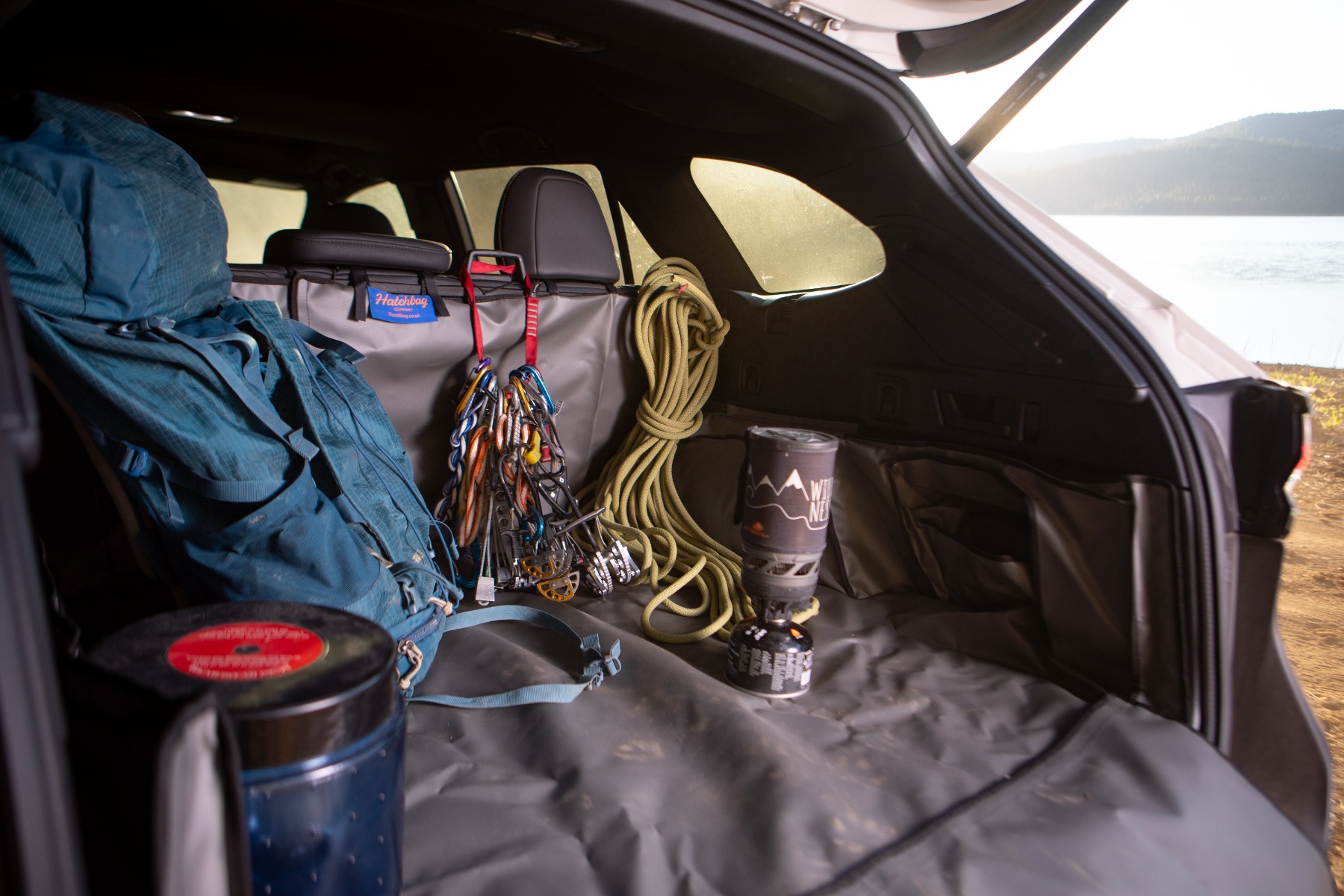
There is a particular kind of chaos that comes with the Saturday morning DIY run. One minute it is a quick trip to B and Q. Next, you are dealing with sliding bags of compost, tools, knocking into each other, and soil working its way into the carpet. If you are trying to build a practical car boot setup for DIY, it usually comes from this exact moment.
A better setup changes that. It does not stop you using your car, but it simply makes everything cleaner, quicker, and easier to deal with.
Why the boot is the hardest-working part of your car
For a lot of people, the boot is more workshop than storage space. It carries the kind of things that are heavy, awkward, dirty, and occasionally damp. Gravel, paving slabs, bags of bark chippings, fence posts, and tins of wood stain. Power tools that could scratch the carpet with a single shift on a roundabout.
The problem is that most boots are not designed for this kind of use. The factory carpet looks tidy at first, but after a few months of regular DIY runs, it starts to show it.
A good boot setup does two things. It keeps things from sliding about, and it keeps the carpet underneath in a state you are not embarrassed by. Both of those things are connected.
Getting organised before you load
A bit of planning before you fill the boot makes a real difference.
Think about what you are carrying and group it properly. Heavy items go in first, low and towards the back seats. This keeps the load stable and reduces movement while driving. Bags of compost, paving slabs, cement mix and the like should sit flat on the boot floor. Tools in cases or bags should be upright if the case has a handle, flat if it does not.
A raised edge boot liner helps here more than anything else, because it creates a contained surface that stops smaller items migrating under your seats or into corners you cannot reach without a torch.
For transporting garden supplies by car, it is worth keeping a few collapsible crates in the boot as permanent fixtures. You can load smaller items into them before they go in, which means a single lift in and out rather than five separate trips.
Keeping the boot clean on DIY runs
This is where most people give up and accept the situation. The boot gets dirty. It just does. Soil, sawdust, stone dust, fertiliser, and the general residue of any project worth doing all end up down there eventually.
The key is not to stop the mess. It is to stop it reaching the carpet. That is what a boot liner does. A properly fitted liner means the compost spills on PVC rather than carpet fibres, and you wipe it out rather than scrubbing at it.
There is a clear difference between a universal liner and one that is actually made for your car. A universal liner shifts about, folds up at the edges, and leaves gaps where the dirt gets through. A custom-made liner sits completely flush with the contours of your boot floor. No bunching at the corners, no sliding, and no gap between the liner and the side panels where grit collects.
For boot setup for home projects, this matters a lot. You want a stable, wipeable base that covers every inch, not something you are repositioning every time you open the boot.
A few real-world scenarios worth thinking about
A first-time homeowner on a Saturday B and Q run is typically carrying a mix of light and heavy items at the same time. Paint, filler, sandpaper, maybe some new light fittings. None of it is enormous but all of it needs a home. A liner with a decent raised lip keeps the smaller bags corralled and makes unloading faster.
An allotment keeper loading up after a Sunday session is dealing with something different. Dirty tools, bags of harvested veg, wet gloves, and soil on absolutely everything. The non slip boot liner surface matters here because things go in quickly and not always carefully. The last thing you want is a trowel sliding forward into the bumper trim every time you accelerate.
A person doing occasional bigger jobs, say laying decking or re-fencing a garden, might have timber lengths, fixings, a drill, and a box of screws in the boot at the same time. On those runs, keeping the boot clean is secondary to keeping everything stable. But once the job is done, the clean-up needs to be fast. If the liner is already in there, it takes five minutes rather than forty.
How a Hatchbag Company makes this easier
At Hatchbag, we make tailor-made boot liners from our own factory in Birkenhead. Every liner is custom-built to the exact dimensions of your vehicle using 3D scanning technology, which means the fit is precise and the coverage is total. Base and sides, fully covered, no gaps.
The material is durable, waterproof, and easy to clean. Soil, tools, and muddy boots all stay on the surface rather than reaching the carpet.
The raised edges are designed into the liner itself, not bolted on as an afterthought, which means they sit properly and do the job they are supposed to. For regular car boot organisation, the liner becomes the foundation layer that everything else sits on top of. Add your crates, add your tool bags, load your supplies. When the job is done, lift out the liner, wipe it down, and put it back.
It genuinely takes longer to find a parking space at the garden centre than it does to clean the boot after.
Ready to sort yours out?
If your boot is currently a mix of carpet stains, scattered fixings, and things you have been meaning to take to the tip since March, a Hatchbag liner is a straightforward fix. Explore the Hatchbag Company range and find the liner made for your vehicle. It is a simple upgrade that turns your boot into a practical, reliable space ready for whatever the weekend brings.